
Frida Ghitis | 16 Sep 2010
ျမန္မာျပည္သူမ်ား ၏ အဆံုးသတ္ တိုက္ပြဲ ကို ကမာၻက ေစာင့္ၾကည့္ေန
With little more than 50 days left until elections on Nov. 7, tensions are rising noticeably in Burma — the country renamed Myanmar by its military rulers. The junta that keeps the country in its steely grip is trying to make sure the election goes off exactly as planned — which is to say, without triggering a new revolt, let alone a full-fledged revolution, and without producing an electoral outcome that would embarrass the regime or weaken its hold on power.
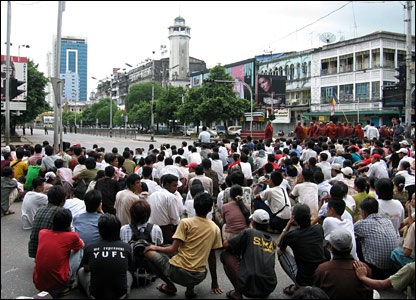
The regime is so nervous that it recently ordered the temporary suspension of the magazine Modern Times as punishment for changing the headline on a weather forecast without obtaining prior approval from the censors. Referring to the arrival of heavy rain, the unauthorized headline read, “Will it come in September?” The twitchy officers at the Press Scrutiny and Registration Division, the government’s official censoring authority, worried that instead of an innocent reference to climate, the wording might be a coded message presaging a new September revolt, one resembling the monks’ uprising of September 2007 known as the Saffron Revolution.
The State Peace and Development Council (SPDC), as the junta led by Gen. Than Shwe is officially known, fears that its opponents may be planning a showdown. In that extraordinarily controlled society, innocent-sounding messages in the mass media have a history of being used to send signals among large numbers of government opponents. Government watchdogs are also honing their skills at intercepting the new electronic messages favored by a younger generation of activists
Reporters without Borders (RSF) describes Burma as a “censor’s paradise,” but the censors have a tough job these days. By all accounts, they’re busy working overtime. “Three officials normally check our newspaper at the Press Scrutiny Board,” a Rangoon-based journalist told RSF, “but with the elections coming up, each line is now read and re-read by a dozen officials.”
The generals have reason to worry. Their efforts to bring legitimacy to a government that is despised by its own oppressed population and rejected by much of the international community have failed before. Their worst misstep came 20 years ago, when the military rulers tried to put an electoral veneer on their forcibly obtained rule, much as they plan to do next November with the upcoming parliamentary election.
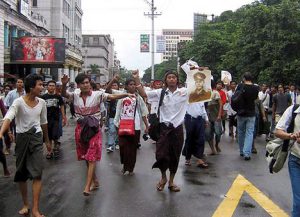 The 1990 voting was also an attempt to resolve the crisis that had begun in August 1988, when a massive student uprising saw Aung San Suu Kyi, the daughter of the country’s independence hero, rise to international prominence. Government forces killed thousands of protesters, cementing the Burmese regime’s position as an international pariah. Two years later, the generals planned an election to delegitimize the opposition and strengthen their standing. But the plan backfired: Suu Kyi’s National League for Democracy (NLD) emerged as the clear winner of the polls.
The junta responded by imprisoning Suu Kyi and much of the NLD leadership. Most of the rest of Burma’s opposition joined those who had already fled abroad, creating a government-in-exile that made sure the regime’s international standing was never normalized. International sanctions and boycotts have gained force since then. In 1991, Suu Kyi, who chose to remain in Burma even though that has meant house arrest for most of the last two decades, won the ultimate symbol of international support for herself and her cause, a Nobel Peace Prize.
This time, Than Shwe and the rest of the junta have made sure the NLD will not spoil their plans.
The electoral laws issued ahead of the voting set the stage for a parliamentary election that would leave the military in control. One-quarter of all seats would be reserved for the military, while any changes to the constitution would require a supermajority of more than 75 percent.
The electoral laws also put the NLD in an impossible situation. One of them created an electoral authority to be appointed in its entirety by the military. Another banned anyone with a non-Burmese spouse from running for office. That piece of legislation was clearly written to specifically target Suu Kyi, who is married to a British citizen.
But the real trap was laid in the Political Party Registration Law, which required parties to make sure that political prisoners are not among their members. That meant that in order to participate in the elections, the NLD would have had to expel Suu Kyi and other leading activists.
The NLD instead decided to boycott the election, and the electoral authorities subsequently determined that the party ceased to exist as a legally recognized entity. The SPDC appeared to have destroyed its NLD nemesis six months before the voting started.
But opponents of the regime have not given up. A new generation of internet-savvy activists have vowed to document the election, even as its preordained outcome seems impossible to derail. Internet activism is extraordinarily dangerous in Burma for those who practice it. Nay Phone Latt, who blogged the Saffron Revolution, was arrested and charged with violating the Electronic Act. He is serving 12 years in one of Burma’s notoriously inhumane prisons. Two high-ranking officials were sentenced to death earlier this year for leaking government documents by e-mail. And even more Burmese have been sentenced to death in recent months for having contact with foreign organizations, such as the U.N.’s International Labor Organization, which has been sharply critical of Burma as it documents the widespread government practice of using slave labor.
The young bloggers say they know the government will win the election, and that the old guard, the NLD, will accomplish nothing with its boycott of the election. That boycott call has been joined by the All Burma Monks’ Alliance, which urged the population not to participate in the sham voting.
Younger activists are vague about their plans, but they sound energized by the new possibilities created by the internet, despite the government’s efforts to control electronic communications and punish those who use them for activities critical of the government.
When the election comes, younger activists will try to replicate the tactics of their Iranian counterparts, who in June 2009 let the world know about Iran’s stolen elections and mobilized their own population with the help of Twitter and other social networking Web sites. But even in Iran, where the population has access to much more resources, it is unclear how much the opposition actually achieved.
The Burmese, disappointed by U.S. President Barack Obama’s failed efforts to bring change in Burma through engagement, can glean some hope in the recent news that Washington will back the establishment of a U.N. panel to investigate charges of war crimes against the Burmese government stemming from the 2007 uprising. However, any international efforts under the U.N.’s auspices will depend on Beijing’s acquiescence — and Beijing, where Than Shwe just paid a visit, has described the November elections as a step toward democracy. By Chinese standards, they just may qualify.
To the Burmese people, on the other hand, the election is just another reminder of the country’s desperate need for democratic reform. Some ask about the long-sought change, like they once did about the rain, Will it come in November?
Frida Ghitis is an independent commentator on world affairs and a World Politics Review contributing editor. Her weekly column, World Citizen, appears every Thursday.
Photo: Burmese democracy advocate and Nobel Peace Prize laureate Aung San Suu Kyi (Licensed under the Creative Commons Attribution 2.5 license).
 Freedom News Group
ေကာင္းပါတရ္1သာတရၤအဲ ့ဒါမွဒုိ ့ေရႊျမန္မာဆုိတာျမန္တရၤမာတရၤေသခ်ာတရ္တိက်တရ္မဟုက္မခံျပိးေတာ ့ေသြးဘရၤေလာက္ရဲ
တရ္ဆုိတာကုိကမာၻကုိျပရေသးတာေပါ ့။(ေစာင္ ့ၾကည္ ့ေနပါအုိကမာၻ) ။ ။